Claude Code is my IDE now
I stopped using a traditional code editor and started building everything through a conversation with an AI agent. Here's what changed.
I rebuilt this entire portfolio by talking to an AI. Not 'with help from.' Inside it. Every file, every deploy, every decision passes through a conversation. The AI proposes, I approve or push back, and the code writes itself as a side effect of the decisions I make. That sounds either obvious or insane depending on how much you have used these tools.
Two things. First, code stopped being the thing I was paid to produce. It became a side effect of decisions I was paid to make. I think about what to build and why. The AI handles the keystrokes.
Second, the loop got shorter. Going from an idea to a working page used to take a sprint. Now it takes an afternoon. The catch: the AI will happily ship something subtly wrong if you let it. Every change goes through the same gate I would give a junior team member. What did you actually change? Show me. Prove the live page is serving it correctly.
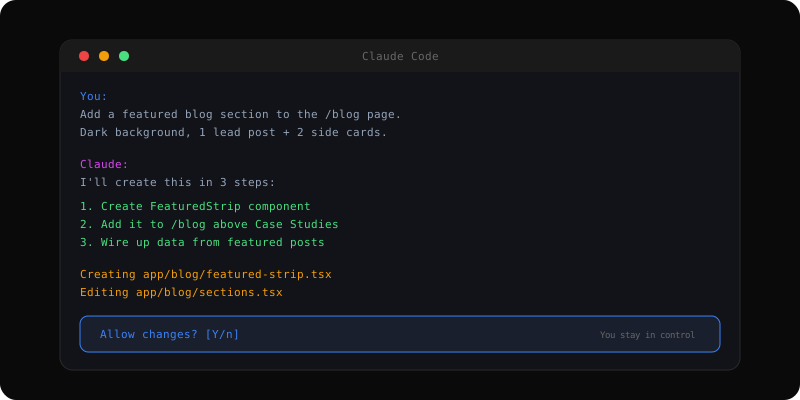
A concrete example: I told Claude Code to create a featured blog section on the /blog page. Dark background, one lead post on the left, two smaller side cards on the right, an archive link at the bottom. Claude proposed a three-step plan: create the component, insert it above the existing Case Studies section, and wire up the data from the featured posts. I approved each step, reviewed the output, and had a working featured strip in about fifteen minutes. Doing it by hand would have taken an hour or more.
I start by describing the task: 'Add image support to blog post sections. Each section should optionally have an image with alt text and a caption. Display it between the body text and the pull quote.' Claude reads the existing code, understands the data types and component structure, and proposes changes to three files: the type definition, the rendering component, and the post content.
I review each change. Sometimes I approve as-is. Sometimes I push back: 'Make the image corners rounder. Add lazy loading. Put the caption in a smaller, muted font.' Claude adjusts and shows me the updated version. I approve, and the changes are written to the files.
The key insight: I am not writing code. I am making decisions about what the code should do. The AI translates those decisions into working files. My job is to be a good reviewer — catching the subtle mistakes, ensuring consistency, and maintaining the design vision that the AI cannot see.
Install Claude Code and run it in any project folder. It reads your project as context. Start a task with a short description of what you want, let it propose a plan, approve or push back, and watch each step as it runs. Course-correct the moment something goes wrong — cheaper than fixing it three steps later.
Set up a rules file (CLAUDE.md) at the root of your project with your conventions and constraints. 'Always use Tailwind for styling. Never touch the deploy script without asking. Use the existing color variables instead of hardcoding values.' This way, every session starts with your preferences already loaded instead of explaining them fresh each time.
The learning curve is not about the tool — it is about learning to think in terms of decisions rather than keystrokes. Instead of 'I need to open this file and change line 47,' you start thinking 'I need the blog cards to have rounded corners and a hover effect.' The AI handles everything between the decision and the result.
Code stopped being the artifact. It became a side effect of decisions.
Building AI products in public.
Occasional notes on what I'm shipping, what's working, and what broke — straight to your inbox. No spam, unsubscribe anytime.
Product leader shipping across enterprise SaaS, AI in production, and 0→1. Writing about what actually ships — not what sounds good in a deck.